


Are you tired of feeling like you have to choose between a meal that’s quick and one that actually nourishes you? I totally get it. Life moves fast, but eating shouldn’t mean throwing great nutrition out the window. That’s why I am so thrilled to introduce you to what might just be your new Tuesday night savior: my Thai Peanut Chicken buddha bowl. It’s colorful, it’s hearty, and honestly, it tastes like something from a fancy lunch spot!

Coming from a background in nutrition science, I focus here at Devour Dish on recipes that truly work for real life—simple, balanced, and rigorously tested. This bowl uses straightforward ingredients to build a powerhouse meal that feels anything but complicated. You’re going to see exactly why layering textures and flavors is the secret to a deeply satisfying, healthy bowl.
- Why This Thai Peanut Chicken buddha bowl is Your New Favorite Healthy Bowl Recipe
- Gathering Ingredients for Your Thai Peanut buddha bowl
- Step-by-Step Instructions for the Perfect buddha bowl
- Customizing Your buddha bowl: Ingredient Swaps and Variations
- Tips for Perfect Meal Prep Bowls
- Frequently Asked Questions about the buddha bowl
- Storage and Reheating Instructions for Your buddha bowl
- Nutritional Estimates for a Thai Peanut Chicken buddha bowl
- Share Your Vibrant Veggie Meals and buddha bowl Creations
Why This Thai Peanut Chicken buddha bowl is Your New Favorite Healthy Bowl Recipe
Listen, I know some bowls feel like a sad pile of leftovers, but this isn’t one of those! This Thai Peanut Chicken buddha bowl is the total package. It checks every box we look for in great healthy bowl recipes. The chicken brings serious protein, making sure you stay full all afternoon. Plus, the homemade peanut sauce? Oh my goodness, that sauce makes everything better!
It’s designed perfectly for meal prep bowls because everything holds up so well in the fridge. You can totally batch cook this on Sunday and have lunch sorted for days. If you want to see how I handle other quick, hearty meals, check out my recipe for the buffalo chicken bowl—it uses similar layering magic!
Quick Assembly for Satisfying Lunch Bowls
The best part is how fast you get this on the table. Everything cooks up in about 45 minutes total, which is perfect for getting a healthy meal on the table on a busy weeknight. You’re not spending all evening slaving over fussy components; we’re using simple seasoning and quick cooking times to bring you these wonderfully satisfying lunch bowls.
Gathering Ingredients for Your Thai Peanut buddha bowl
Okay, grabbing your ingredients is the fun part! I always like laying everything out before I start cooking—it keeps me from realizing halfway through that I’m out of ginger or something ridiculous. We’re keeping this simple, but grouping things makes sense for efficiency. Remember, my recipes are designed to use things you probably already have!
Quinoa Base and Protein Prep
First up, we need that satisfying base. Don’t skimp on this; the quinoa is what makes these easy grain bowls feel substantial. For the protein, we’re using chicken breast or thighs that you need to chop up—make sure they’re about 1-inch pieces so they cook evenly and quickly in the skillet. Don’t sweat the seasoning; it’s just a little olive oil, garlic powder, salt, and pepper. Super simple!
But hey, if you’re skipping chicken this week, this recipe is fantastic when swapped out entirely for extra firm tofu or even some black beans. That’s how you pull together truly colorful vegan bowls without changing the entire flavor profile!

The Best buddha bowl Sauces: Thai Peanut Dressing
If you skip everything else, please don’t skip making this sauce from scratch. Seriously. This is where the magic happens for every single buddha bowl I’ve ever made. It pulls the whole dish together. We need the backbone of flavor from richness, and that means creamy peanut butter—use half a cup exactly—and we need that salty, umami punch from soy sauce or tamari. Those two ingredients are non-negotiable for the right result here!
Step-by-Step Instructions for the Perfect buddha bowl
Okay, let’s get cooking! The beauty of this recipe is that steps one through three happen almost simultaneously, so if you’re multitasking like I usually am, you can knock this out incredibly fast. Remember, we want everything plated warm but not scorching hot, so we can drizzle that cool, creamy sauce over the top later!
Cooking the Quinoa Base for Your buddha bowl
Step one is setting up our foundation. You need to get that quinoa started first because it takes about 15 minutes just sitting there absorbing liquid. Toss one cup of quinoa with two cups of water or broth in a saucepan. Now, here’s my little trick for making these easy grain bowls taste less bland: skip the water and use chicken or vegetable broth instead! It adds a savory depth without adding any extra steps. Bring it to a boil, drop the heat way down low, pop the lid on tight, and let it simmer for 15 minutes until all the liquid is gone. Then, turn off the heat and just let it sit—don’t lift that lid! We’re just letting it steam itself fluffy. If you want to try a brighter base sometime, you should check out my cilantro lime quinoa salad for another great grain idea.
Sautéing Chicken and Achieving Tender-Crisp Veggies
While the quinoa is doing its thing, let’s handle the protein. In a bowl, toss those one-inch chicken pieces with your oil and seasonings. Heat up a big skillet—medium-high heat is where we want to be. Add the chicken and cook it until it’s nicely browned and cooked through, which should take about 6 to 8 minutes. Once that’s done, scoop the chicken out and set it aside; we don’t want it overcooking. Don’t overcrowd the pan when you brown the chicken, or it will steam instead of getting that nice flavorful sear!
Now, use that same skillet—don’t wash it, we want those chicken bits of flavor! Throw in the broccoli, carrots, and bell pepper. We’re cooking these until they are tender-crisp, usually just about five minutes stirring frequently. You don’t want them mushy; we’re looking for a nice little resistance when you bite them. Once they’re ready, toss the cooked chicken right back into the pan to warm up together before we start assembling this gorgeous buddha bowl.

Creating the Creamy Thai Peanut Sauce
This step is pure whisking happiness! In a separate small bowl, combine the peanut butter, warm water, soy sauce (or tamari, if we’re doing gluten-free!), rice vinegar, maple syrup, ginger, and garlic. Whisk it like you mean it! It might look thick at first, but keep at it. If it seems too gloppy to drizzle, add more warm water one teaspoon at a time until you get that perfect, pourable consistency. This sauce is what transforms your simple ingredients into that amazing flavor profile you see online. It’s the secret weapon for packing flavor into your buddha bowl!
Customizing Your buddha bowl: Ingredient Swaps and Variations
One of the absolute best things about learning the structure of a great buddha bowl is that you suddenly unlock infinite possibilities! Once you know the ratio of grain to veg to protein, you can twist this into exactly what your body needs that day. Since we’re aiming for highly functional meals here, let’s talk about making these fit your specific nutritional goals. People often ask me how to use these as customizable grain bowls, and honestly, it’s so easy!
Making this a High Protein Dinners Option
If you are focusing on hitting those fitness goals or perhaps you just need a dinner that really holds you over until the morning, this format sings with different proteins! While the chicken is fantastic, you can easily swap it out. For example, baked or pan-seared salmon works like a dream with this peanut sauce. Or if you want something super quick for high protein dinners, grab some large shrimp and cook them fast in the same skillet before you do the veggies.
I actually have a recipe for coconut chicken and rice that uses a similar Asian-inspired flavor profile, which might inspire you next time you’re looking to switch up your protein game!
Gluten Free Lunch Ideas and Vegan buddha bowl Substitutions
This recipe is already naturally easy to adapt, but let’s talk specifics, because I know so many of you need these tweaks. First off, for anyone needing gluten free lunch ideas, the change is incredibly small: just make sure you use tamari instead of regular soy sauce in the dressing. That handles the gluten aspect beautifully.
Now, to turn this into one of those gorgeous colorful vegan bowls? Easy peasy. You can skip the chicken entirely and use firm, pressed tofu tossed in the same seasoning mix. Or, if you prefer beans, roasted chickpeas are amazing here—they get so crunchy! The sauce works perfectly with both, keeping that vibrant, satisfying feel that makes these the ultimate plant based power bowls.
If you’re looking for even more ways to think about bowl versatility, I recently saw a great resource about making bowls using different flavor bases, kind of like the sweet potato bowl inspiration here, that might give you new ideas for your next batch!
Tips for Perfect Meal Prep Bowls
If you’ve made it this far, you’re clearly serious about making healthy food ahead of time, which I totally admire! Having ready-to-go meal prep bowls waiting is a game-changer for surviving busy weeks. I’ve learned a few tricks over the years to ensure that when you pull one of these bowls out on Wednesday, it tastes just as great as it did on Sunday. The key here, my friend, is separation!
The biggest mistake people make when prepping bowls is mixing everything together right away. You end up with soggy carrots and a lukewarm, thick dressing stuck to everything. Trust me, keep your components separate until the moment you eat them. If you want to see another great recipe that holds up well for batch cooking, have a look at my instructions for easy one-pot turkey soup—it’s fantastic for freezing!
Here’s the breakdown for keeping your Thai Peanut Chicken bowl fresh:
- The Quinoa and Veggies: These are sturdy! You can mix your cooked quinoa, the slightly cooked chicken, broccoli, carrots, and cabbage right into your containers. They are happy sitting together in the fridge. If you decide to prep a whole week’s worth, you can look at some great advice on batch cooking techniques over at this helpful article that dives into making massive batches of these kinds of meals.
- The Nuts and Herbs: The chopped peanuts and fresh cilantro garnish? Keep those in a tiny baggie on the side or sprinkle them on right before you pack the container lid down. If they sit in the dressing, they turn soft immediately, and we want crunch in this bowl!
- The Peanut Sauce: This is the most crucial separation! Never, ever pour the dressing over the assembled bowls until you are ready to eat or serve. Store the entire batch of Thai Peanut Sauce in a small, airtight jar in the fridge. As you know, the sauce is mostly fats and sugars, which keeps it fresh longer, but drizzling it on cold or room-temperature components just before eating keeps everything perfectly crisp and textured.
Frequently Asked Questions about the buddha bowl
I know when you’re trying a new recipe, especially one that relies on layering so many good things, a few questions always pop up! I’ve tried to cover all the bases, but if I missed something about making these buddha bowl components perfect, let me know below in the comments. We’re all learning here, and I want you to have success!
Can I use brown rice instead of quinoa in this buddha bowl?
Oh, absolutely! Quinoa is my go-to because I like that tiny pop of texture it gives alongside the chicken and veggies, and honestly, it sneaks in a little extra protein and fiber, which is why I often recommend it for these kinds of easy grain bowls. However, brown rice works beautifully if that’s what you have on hand, or maybe you prefer the nuttier flavor of wild rice.
The only thing I’d say is that brown rice takes a little longer to cook through, and it won’t absorb the dressing quite the same way quinoa does. It’s totally interchangeable—just make sure your rice is cooked perfectly fluffy before you start assembling!
How long do these Meal Prep Bowls last in the refrigerator?
This is the essential question for anyone trying to eat healthier during the week! Because we talked about keeping the sauce separate, these meal prep bowls hold up incredibly well. If you keep the cooked elements (chicken, quinoa, veggies) sealed tightly, I find they are perfectly fresh and delicious for up to four days in the fridge.
The only thing that might get sad is the fresh cabbage; if you want it super crisp, maybe leave that out of the main container and add it fresh when you eat. But really, the sauce needs to stay separate, always! That small jar of dressing will hang out happily next to your containers for the whole four days.
Storage and Reheating Instructions for Your buddha bowl
We talked a lot about prepping ahead, which is amazing, but now we need the easy logistics for storage! Keeping this buddha bowl delicious for days is all about treating the components right. I’ve found that the fresh crunch of the vegetables is the hardest thing to maintain, so my general rule for these kinds of bowls is: sauce and crunch must stay separate until serving time. This maximizes flavor and texture!
For storage, make sure everything—the chicken, the cooked quinoa, and the sturdy vegetables like broccoli and carrots—is completely cooled down before you seal up your containers. Putting hot food into a sealed container causes condensation, and condensation equals sogginess. Nobody wants a soggy grain dish, trust me on this one!
Keeping It Cool: The Best Storage Method
I always use containers with separate little compartments if I can swing it, but honestly, just having airtight glass containers works great too. Load the bottom layer with the quinoa. Then, pile on your chicken and cooked veggies—broccoli, carrots, peppers. Shredded cabbage goes on top of that layer, acting almost like a barrier before you seal it up. It’s visually exciting to open up and see all those distinct sections!
Remember what I said about the sauce? Keep that luscious Thai peanut dressing completely separate. I store mine in a tiny little jar—sometimes I even use baby food jars I saved!—and just nestle that jar right into the meal prep bag with the bowl.
To Reheat or Not to Reheat? That’s the Question!
Honestly, I eat these cold most of the time! Since everything is already cooked, it’s essentially a hearty, delicious quinoa salad when chilled. If you prefer a warm meal—and I sometimes do when it’s chilly outside—you have a couple of options. The chicken and quinoa are best warmed up slightly in the microwave for about 60 to 90 seconds.
But here’s the absolute golden rule for reheating any type of buddha bowl: never reheat the vegetables with the grain or protein. Microwave the chicken and quinoa separately until warm, then transfer them to your bowl. Then, top it with the raw, crisp veggies (like the cabbage) and drizzle on that cold, creamy peanut sauce. That contrast between the slightly warm base and the cool, crisp toppings is just divine!

Nutritional Estimates for a Thai Peanut Chicken buddha bowl
I always stress that food should taste amazing first, but when you’re making something like this Thai Peanut Chicken bowl regularly, knowing the nutritional breakdown is super helpful for planning your week! Since I spent time studying nutrition science, I like to give you a ballpark idea of what you’re getting in one of these power-packed bowls.
This information is based on the recipe as written: using chicken breast, the specified amount of peanut sauce, and the standard vegetables listed. Remember, this is a high-protein meal, designed to keep you satisfied and energized!
Here are the general estimates for one serving (1 bowl):
- Calories: 580
- Protein: 35g
- Carbohydrates: 45g
- Fat: 30g
- Fiber: 7g
Now, before you start holding me strictly accountable to the decimal point here—and I know some of you like to check the math!—I have to add my standard disclaimer. These numbers are, as they say, estimates. That means that if you decide to swap out the chicken for a fattier thigh cut, or if you double the maple syrup in the sauce because you have a major sweet tooth (I won’t judge!), those numbers will shift.
We use standard ingredient databases for these calculations, but the exact brand of peanut butter or the measurements you use when chopping your carrots will always play a role. So, think of these figures as a reliable guide for your macro planning, not a strict guarantee from the USDA. But hey, getting 35 grams of protein in a weekday dinner? I call that a huge win!
Share Your Vibrant Veggie Meals and buddha bowl Creations
And there you have it! My absolute favorite way to pull together a meal that is bursting with flavor, super good for you, and happens to make cooking for the week completely painless. If you’re anything like me, seeing all those beautiful colors piled high in the bowl makes you genuinely excited to eat healthy!
I truly hope this Thai Peanut Chicken buddha bowl becomes a regular feature in your kitchen rotation. I want to see what you create! Did you add toasted sesame seeds or maybe some fresh avocado slices? Did you try my tip about adding broth instead of water to the quinoa?
Please, if you whip up a batch of these vibrant veggie meals, take a picture and tag me on Instagram! I love seeing your takes on my recipes. And while you’re here, don’t forget to leave a star rating right below the recipe card—it helps other folks who are looking for simple, delicious weeknight solutions find this post! If you’re looking for another easy, flavorful side dish to go with your bowls next time, you might enjoy my recipe for easy homemade garlic butter; it’s surprisingly versatile!
Happy cooking, everyone! I’ll see you in the comments or next week when I share my favorite one-pan dinner!
PrintThai Peanut Chicken Buddha Bowl for Meal Prep
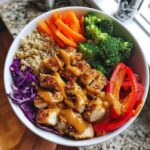
Make this high protein Thai Peanut Chicken Buddha Bowl. It features seasoned chicken, fresh vegetables, and a creamy peanut sauce over a quinoa base. This recipe is great for weeknight dinners or healthy meal prep.
- Prep Time: 20 min
- Cook Time: 25 min
- Total Time: 45 min
- Yield: 4 servings 1x
- Category: Dinner
- Method: Skillet Cooking
- Cuisine: Asian Inspired
- Diet: Vegetarian
Ingredients
- 1 cup quinoa, uncooked
- 2 cups water or broth
- 1 pound boneless, skinless chicken breasts or thighs, cut into 1-inch pieces
- 1 tablespoon olive oil
- 1 teaspoon garlic powder
- 1/2 teaspoon salt
- 1/4 teaspoon black pepper
- 1 cup broccoli florets
- 1 cup sliced carrots
- 1 red bell pepper, sliced
- 1/2 cup shredded purple cabbage
- 1/4 cup chopped peanuts, for garnish
- 2 tablespoons chopped fresh cilantro, for garnish
- For the Thai Peanut Sauce:
- 1/2 cup creamy peanut butter
- 1/4 cup warm water
- 3 tablespoons soy sauce or tamari
- 2 tablespoons rice vinegar
- 1 tablespoon maple syrup or honey
- 1 teaspoon grated fresh ginger
- 1 clove garlic, minced
Instructions
- Cook the quinoa: Combine quinoa and water or broth in a saucepan. Bring to a boil, then reduce heat to low, cover, and simmer for 15 minutes, or until all liquid is absorbed. Fluff with a fork.
- Prepare the chicken: In a bowl, toss the chicken pieces with olive oil, garlic powder, salt, and pepper.
- Cook the chicken and vegetables: Heat a large skillet over medium-high heat. Add the seasoned chicken and cook until browned and cooked through, about 6-8 minutes. Remove chicken and set aside. Add broccoli, carrots, and bell pepper to the same skillet. Cook until tender-crisp, about 5 minutes. Return the chicken to the skillet.
- Make the Thai Peanut Sauce: Whisk together peanut butter, warm water, soy sauce, rice vinegar, maple syrup, ginger, and minced garlic in a small bowl until smooth. Add more warm water, one teaspoon at a time, if you need a thinner consistency.
- Assemble the Buddha Bowls: Divide the cooked quinoa among four bowls. Arrange the cooked chicken, broccoli, carrots, bell pepper, and shredded cabbage in sections over the quinoa.
- Serve: Drizzle generously with the Thai Peanut Sauce. Garnish with chopped peanuts and fresh cilantro.
Notes
- For easy meal prep, store the sauce separately and assemble the bowls just before eating.
- You can substitute tofu or salmon for the chicken to make this a plant based power bowl or high protein dinner variation.
- If you want a gluten free lunch idea, use tamari instead of soy sauce in the dressing.
Nutrition
- Serving Size: 1 bowl
- Calories: 580
- Sugar: 12
- Sodium: 550
- Fat: 30
- Saturated Fat: 5
- Unsaturated Fat: 25
- Trans Fat: 0
- Carbohydrates: 45
- Fiber: 7
- Protein: 35
- Cholesterol: 95